Events · brand activations
An activation earns its footprint when people line up on purpose.
Agencies book the rig because a working press is spectacle, souvenir, and dwell-time engine in one 10×10 square.
The mechanics of a press-line activation
An activation lives or dies on two numbers: how long guests stay, and what they carry out. Live pressing attacks both. The make-it-in-front-of-you moment holds attention for the full cycle — pick, press, peel, handoff — and the thing guests carry out is the brand, worn, not a flyer headed for a bin.
We design the menu with your agency ahead of the event: co-branded lockups, event-exclusive colorways, or a garment wall that ladders from free gift to premium upgrade. Because DTF is full-color with no per-color cost, gradient-heavy and photo-real artwork that would be painful on press screens is trivially printable here.
Throughput you can put in a recap deck
Each press finishes 60–120 pieces per hour depending on menu complexity; a two-press station with a tight three-design menu sits at the top of that range. We help you pick the guest journey to match: open queue for festivals-within-festivals, RSVP or wristband gating for capped experiences, or a claim-code flow when the client wants a registration touchpoint before the shirt.
Built to sit inside a larger production
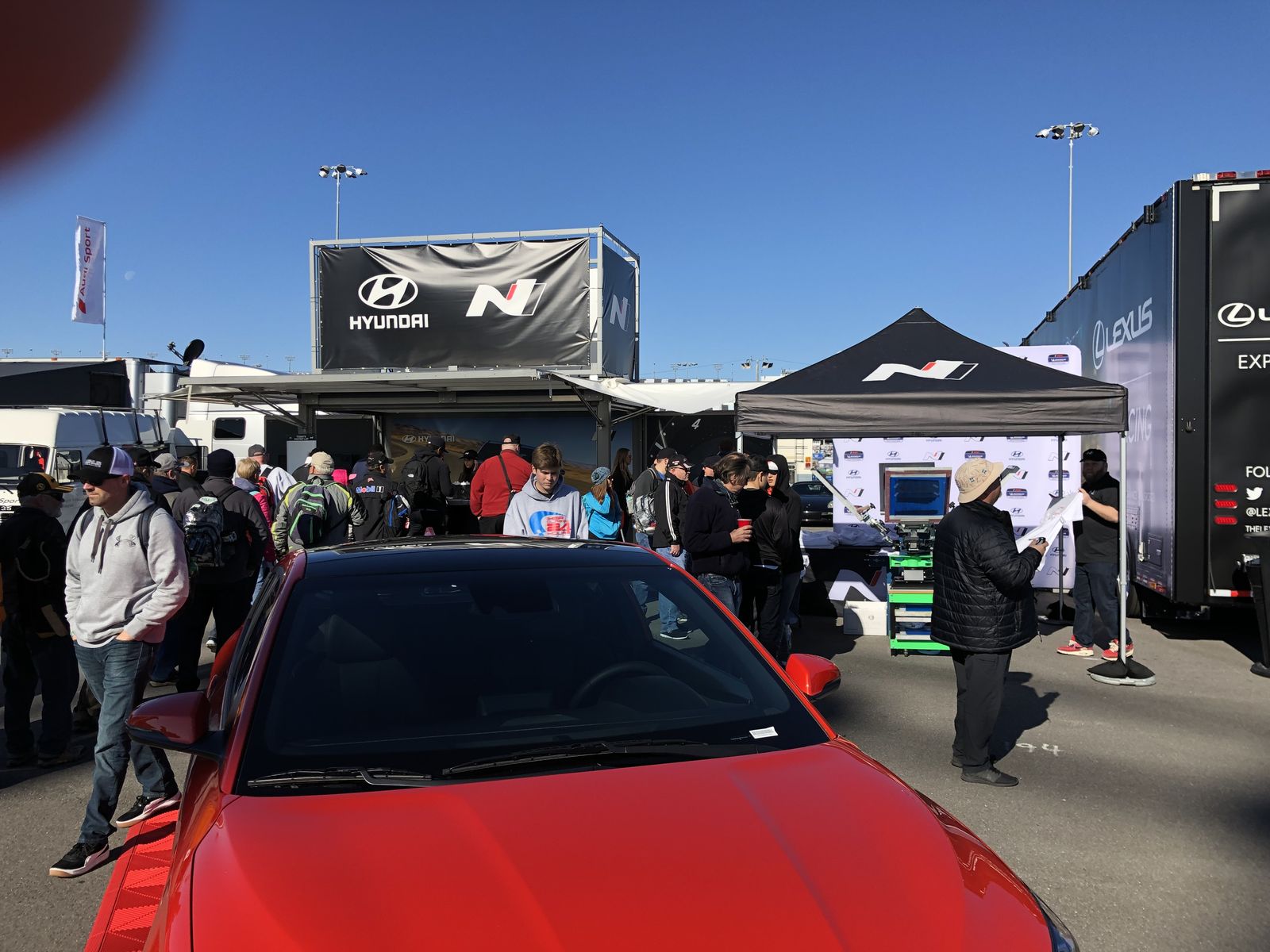
Sponsor tents, midways, and fan fests are shared environments, and we behave like a good neighbor: pre-submitted power draw, certificates of insurance to venue spec, load-in windows honored to the minute, and a crew in show-blacks or your event uniform. We've run beside DJ rigs, show cars, and pyro cues — see the raceway build in our case studies for how that plays out on a race weekend.
For budgeting, an activation station starts at the same base as any staffed build (details here); the variables that matter most are hours, garment tier, and whether your program needs a Vegas or nationwide route.